Over the past few months, I have spoken with hundreds of senior executives at America’s largest transportation companies. Almost everyone says they have recently discovered a massive influx of foreign drivers and motor carriers. Most assumed that this was a gradual process. No one noticed that it was a spectacle.
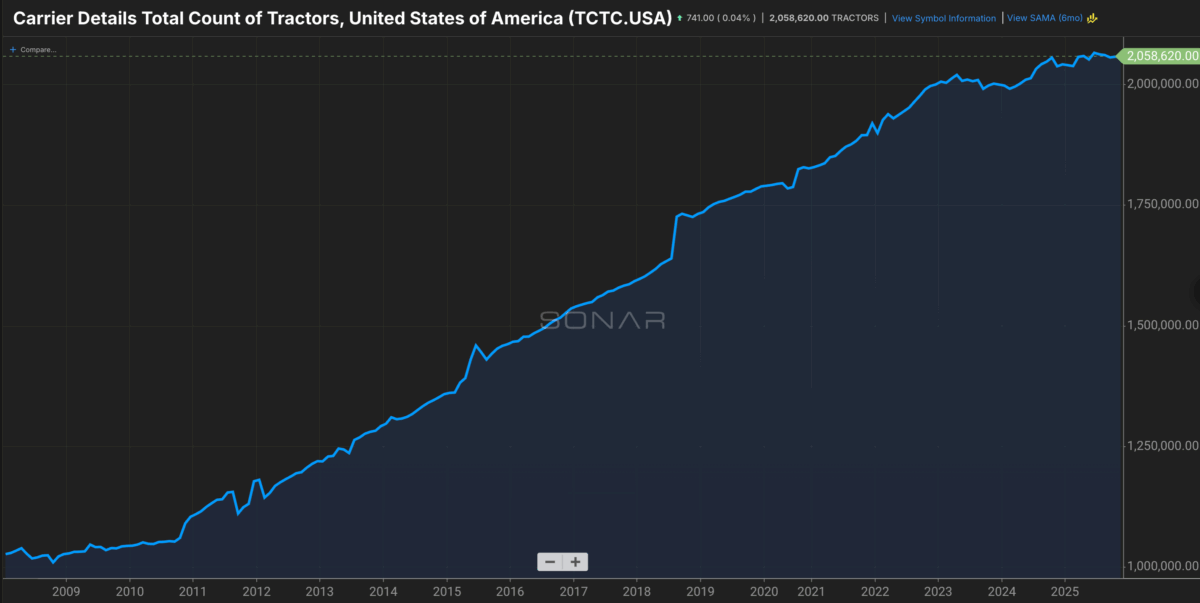
Few had ever heard the term “non-resident CDL” until this summer or realized how many drivers with little or no real training flooded the industry. They failed to understand that despite their investments in enhanced training and compliance efforts in recent years, the smallest operators received a huge gift: the ability to “train” their truck drivers with little oversight from federal regulators.
The changes stemmed from the long-held belief—pushed hard by the American Trucking Association (ATA)—that the United States faced a chronic shortage of truck drivers. ATA’s solution was to lobby Congress and the FMCSA to lower any barriers to entry, ensuring that new drivers would flock to the large fleets of ATA members rather than small operators.
This premise was rooted in an old reality: Twenty years ago, only the largest shipping companies offered real-time tracking, electronic bidding, and direct shipper relationships. Small carriers and brokers were stuck with phones, faxes and leftover goods.
That world no longer exists.
Fueled by billions in venture capital and private equity, shipping brokers have not only caught up with the technology, they’ve also left behind large fleets. They offer single-source routing guides, superior automation, and most importantly, no obligation to enforce hours of operation, speed limiters, or driver qualification standards. Brokers simply buy the cheapest available capacity.
When the ATA successfully lobbied for the removal of barriers to entry, it inadvertently left the industry to those dealers and market segments that were least compliant.
Key regulatory changes that removed barriers and undermined safety enforcement:
- 2016 – DOT stops enforcing English proficiency requirements for CDLs
- 2018 – ELD mandate implemented. Self-certifying devices with deliberate backdoors allow for unlimited editing of driving hours
- 2019 – Indirect CDLs are introduced, allowing foreign nationals to obtain US business licenses.
- 2022 – Entry-level driver’s education law explodes unlicensed CDL factories selling licenses for $500-$1,000 in days with virtually no training.
These foreign drivers with minimal training cannot pass the test of big and compliant companies (no work permit, poor English, zero experience). They end up with small, often foreign-owned fleets that pay 40 percent below market and typically work 14 to 20 hours a day using tampered ELDs.
Three other accelerators turned a bad situation into a disaster:
- Freight brokers now control ≈⅓ of all loads and often offer them at the lowest prices, bringing spot rates below the cost of legal operations.
- The increase in immigration during the Biden era caused millions of new immigrants to look for work. Foreign-owned fleets were heavily recruited – higher pay than home, no experience required, free “accommodation” on berth.
- During the covid shipping boom, shipping companies and brokers filled hundreds of thousands of shipping and brokerage jobs overseas. When the Great Shipping Depression hit and these positions were eliminated, many laid-off overseas workers used their new industry knowledge to organize the theft of cargo from jurisdictions outside the reach of US law enforcement.
The results are undeniable:
- Legal carriers and drivers can hardly even integrate. Freight has become an economic transportation engine that follows the rules
- Cargo theft is now a national security crisis on an industrial scale, coordinated by foreign distributors and brokers working with foreign drivers born inside the United States.
- Despite billions spent on safety technology, fatal truck crashes have risen nearly 40 percent since 2014 — almost entirely due to the untrained, overworked, and inexperienced drivers who now operate the 80,000-pound rigs.
In short, a well-intentioned but disastrously naïve campaign to “fix the driver shortage,” combined with regulatory loopholes, uncontrolled immigration, technological backdoors, and outsourcing, has essentially broken the American trucking industry in less than a decade—and virtually no one in Washington or in corporate offices saw it coming.
The post How America’s Trucking Industry Became a Hellscape appeared first on FreightWaves.
About the Author